
Instagram Ads for Catering: How to Get More Clients and Bookings
Create Free Account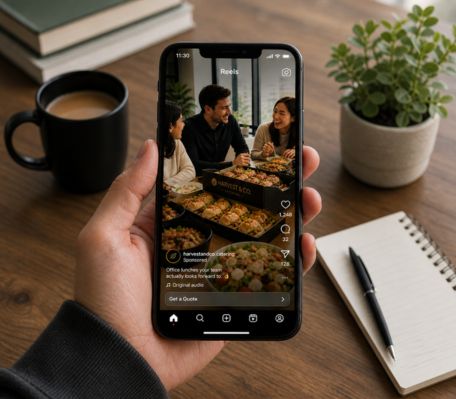
Instagram is where food looks its best. A perfectly plated corporate lunch, a beautifully set event spread, a behind-the-scenes clip of a kitchen preparing a 100-person order. The platform is built for exactly the kind of visual storytelling that makes a catering operation look trustworthy, capable, and worth hiring.
Most catering businesses treat Instagram as a place to post organic content and hope someone sees it. That approach produces inconsistent results and no way to reach the specific buyers who control catering budgets in your city. Instagram Ads change that. They put your catering business in front of the right people, with the right message, at the right moment in their decision-making process.
Unlike Facebook, which skews toward older demographics and text-heavy content, Instagram is a visual-first platform where buying decisions are heavily influenced by what something looks like before anything else. For catering, where the product is inherently visual and the buyer is evaluating trust and quality simultaneously, that visual-first environment is an advantage rather than a constraint.
Getting results from Instagram Ads for catering requires running the right ad type for the right objective at the right stage of the buyer journey. There are four stages to this strategy. Here is how to approach each one.
Why Instagram is a strong platform for catering marketing
Instagram's user base includes a significant concentration of the exact buyers catering businesses need to reach. Office managers, event planners, HR professionals, and executive assistants are all active on the platform, both personally and professionally. Many use Instagram to research vendors, check reviews through tagged content, and evaluate the visual quality of a catering operation before making first contact.
Instagram also introduced a significant SEO change in mid-2025: Google now indexes public posts and videos from professional Instagram accounts. This means your catering content on Instagram is searchable not just within the app but on Google itself. An Instagram Reel showing a corporate lunch setup, captioned with relevant keywords, can appear in Google search results for catering queries in your area. Organic Instagram content and paid Instagram Ads now work together to build both social proof and search visibility simultaneously.
The paid ads system on Instagram runs through Meta Ads Manager, the same platform as Facebook Ads. Targeting capabilities are identical: job title, company size, location, interests, and custom audiences built from your existing contact lists. The difference is the creative format and the audience behavior. Instagram users engage with visual content at higher rates and are significantly more likely to act on content that stops their scroll through strong imagery or video.
Step 1: Run objective-specific ads across three stages of the buyer journey
The most common mistake catering businesses make with Instagram Ads is running one ad and expecting it to do everything. A buyer who has never heard of your restaurant and a buyer who has already watched your Reel and saved your profile need completely different messages. Running objective-specific campaigns for each stage of the buyer journey is what makes Instagram Ads compound rather than produce a spike of activity and nothing more.
Instagram's campaign objectives map directly to awareness, consideration, and conversion. Each stage uses different ad formats, different creative, and different calls to action. Together they build a system that moves a cold audience from first impression to booked client.
Awareness: Reels and video ads: The awareness stage is built for reach. The goal is to get your catering business in front of the right people and create a visual impression strong enough to be remembered. Instagram Reels are the highest-reach format on the platform and the starting point for any awareness campaign. A 15 to 30 second Reel showing real event footage, a kitchen walkthrough, or a time-lapse of a large catering order being assembled stops the scroll in a way that static images rarely do. Set this campaign to the Reach or Video Views objective. You are not asking for a click. You are building an audience that recognises your brand when they encounter it in the consideration stage.
Consideration: Carousel and Stories ads: Once someone has engaged with your awareness content, the consideration stage moves them from recognition to evaluation. Carousel ads, which display multiple images or short videos in a swipeable format, are particularly effective here. A carousel that shows your catering menu formats, a before-and-after of an event setup, or a sequence of client testimonials alongside food photography gives a buyer enough information to form a genuine opinion about your operation. Instagram Stories ads appear between organic Stories and occupy the full screen, which creates an immersive viewing experience with no competing content. Use Stories ads for time-sensitive offers, seasonal catering packages, or direct testimonials from corporate clients. Set this campaign to the Traffic or Engagement objective and link to your dedicated catering landing page.
Conversion: Lead ads and direct message campaigns: The conversion stage is where contact is captured. Instagram Lead Ads work identically to Facebook Lead Ads: a contact form appears within the app, autofilling the user's name, email, and phone number from their Meta profile. Two taps and the form is submitted. No website visit required, no friction, no drop-off. For catering businesses that prefer a more personal first contact, Instagram also supports Direct Message objectives that open a conversation in Instagram DMs when a prospect taps the ad. This works particularly well for restaurant owners who want to handle initial inquiries personally before routing prospects into an automated email sequence. Set this campaign to the Leads or Messages objective depending on which follow-up approach your operation can support.
Step 2: Build creative that earns attention before it asks for anything
Instagram is a competitive environment for attention. A catering ad appears in the same feed as content from people the user actually chose to follow. To earn the pause, your creative needs to do something in the first two seconds that justifies the interruption.
The visual quality of your creative is the most important variable in Instagram ad performance. This does not mean expensive production. It means real, well-lit photography and video of your actual food and events rather than stock imagery or poorly lit phone photos taken in a rush. Instagram users are visually sophisticated and recognise generic content immediately. Authentic, high-quality visuals of real catering work signal professionalism more effectively than any copy can.
Reels creative that works for catering: The highest-performing Reels for catering ads are short, specific, and show the product in a real context. A 20-second clip of a corporate lunch being set up in a real office, with good lighting and clean presentation, performs better than a produced brand video with motion graphics and background music. The caption matters too. Lead with the most important information in the first line, since most users do not expand captions. "Corporate catering for offices across [city]. Order for 10 to 500 people" in the first line tells the relevant buyer immediately whether this is for them.
Carousel creative that converts at the consideration stage: The first image in a carousel is the only one guaranteed to be seen. It needs to be strong enough to earn the swipe. Use your single best food or event photo as the first card. Subsequent cards can show format variety, dietary accommodation, client testimonials, and a final card with a clear call to action. Each card should feel like part of a coherent story rather than a disconnected collection of images.
Stories creative for immediacy and scale: Stories ads should feel native to the format rather than like a resized feed post. Vertical video, on-screen text overlays, and a clear tap-to-act prompt all improve Stories performance. Use Stories ads for time-sensitive messages: "We have availability for June corporate lunches" or "New summer catering menu available now." The full-screen format creates urgency that the feed format cannot.
Owner video for the awareness stage: The single most effective awareness creative for a local catering business on Instagram is a short video of the restaurant owner speaking directly to camera. Not scripted, not produced. The owner, in the restaurant, introducing themselves and explaining who they serve. An office manager who has seen hundreds of catering brand ads has never seen the owner of a local restaurant look her in the eye via a Reel and personally explain why she should consider them for the next office lunch. That authenticity creates a first impression that polished creative rarely matches.
Step 3: Target the buyers who control catering decisions, not a general audience
The targeting precision available through Meta Ads Manager is one of the strongest arguments for using Instagram Ads specifically for corporate catering. You are not trying to reach everyone in your city who might someday need food. You are trying to reach the specific people whose job involves organising catering for groups of other people. That audience is identifiable, targetable, and reachable at a relatively low cost compared to other B2B marketing channels.
Job title targeting: Meta allows targeting by job title as reported on Facebook and LinkedIn-connected profiles. For a corporate catering campaign, the primary titles to target are office managers, executive assistants, HR coordinators, event coordinators, operations managers, and administrative managers. These are the roles that own catering decisions in most organisations. Targeting them directly ensures your ad budget is spent reaching people with both the authority and the professional need to hire a caterer.
Geographic radius: Set your geographic targeting to the delivery radius your catering operation can reliably serve. Targeting too broadly wastes budget on impressions from buyers you cannot actually service. Targeting a precise radius around your restaurant, or around the business districts where your ideal corporate clients are concentrated, maximises the relevance of every impression.
Custom and lookalike audiences: Upload your existing catering client list to Meta as a custom audience. This allows you to run retargeting campaigns specifically to people who have already ordered from you, which is one of the most cost-efficient ways to drive repeat bookings. From that custom audience, Meta can build a lookalike audience of people who share similar characteristics to your existing clients. Lookalike audiences consistently outperform broad interest-based targeting because they are built from real conversion data rather than demographic assumptions.
Step 4: Convert Instagram leads into catering clients with a structured follow-up
An Instagram lead captured through a Lead Ad or a DM campaign is the beginning of the relationship, not the end of the campaign. The conversion rate from Instagram lead to booked catering client depends almost entirely on what happens after the form is submitted or the first message is sent.
The follow-up structure for Instagram leads mirrors what works for any catering lead channel: speed, personalisation, and a sequence that builds trust before asking for a commitment.
Respond within the hour: Speed is the most important variable in the first follow-up. A prospect who fills out an Instagram Lead Ad form and hears back within an hour converts at a significantly higher rate than one who waits until the next day. Set up an immediate automated acknowledgment that confirms receipt and promises a personal follow-up within a defined window. Then follow through.
Personalise the first contact: Use the lead form data to personalise the outreach. A message that references the prospect's business name, acknowledges their company size, and proposes something specific, "based on your team size, our corporate lunch packages starting at $X per person would cover your group comfortably" converts better than a generic introduction. The personalisation signals that you read the form and that this is not a bulk response.
Run a five-week email sequence: Transfer every Instagram lead into your email marketing platform immediately after capture. A sequence of around ten emails dripped over five weeks builds the familiarity and trust that converts a warm lead into a first booking. The sequence should move from introduction to social proof to objection handling to a specific first-order offer. Pair the sequence with personal text messages to your highest-priority prospects: those with larger teams and more frequent catering needs.
Retarget non-converters with new creative: Prospects who opened your lead form but did not submit, or who engaged with your Reels but never clicked through, are warm audiences worth retargeting. Build a custom audience from Instagram profile visitors and video viewers and serve them a different creative angle. A testimonial carousel for someone who responded to your awareness Reel. A specific first-order offer for someone who visited your catering landing page. Retargeting these micro-audiences costs a fraction of cold prospecting and consistently produces the highest conversion rates in any Instagram Ads campaign.
Instagram Ads for catering is a visual relationship, not a visual billboard
The catering businesses that get consistent results from Instagram Ads are not the ones with the biggest budgets or the most polished creative. They are the ones who understand that Instagram is a relationship-building platform and build their ad strategy accordingly.
Awareness Reels that feel authentic. Consideration carousels that answer real buyer questions. Lead Ads that capture qualified contacts without friction. A follow-up system that converts those contacts into first-time clients. And retargeting that keeps your restaurant visible to warm prospects until they are ready to book.
Each stage builds on the one before it. A prospect who has seen your owner video, watched your event Reel, swiped through your carousel, and received a personalised follow-up message is not a cold lead by the time they get your first-order offer. They already know you. They already trust the quality. The booking is the last step of a journey that Instagram built for you.
Frequently Asked Questions
Why should catering businesses use Instagram Ads specifically?
Instagram is a visual-first platform where food content performs exceptionally well. Corporate catering buyers including office managers, HR coordinators, and event planners are active on Instagram and make vendor evaluations based heavily on visual quality. Instagram Ads also use Meta's targeting tools, which allow you to reach people by job title and company size, making it possible to target the exact decision-makers who control catering budgets in your area.
What types of Instagram Ads work best for catering businesses?
Reels for awareness and reach, carousel ads for consideration and menu presentation, Stories ads for time-sensitive offers, and Lead Ads for capturing qualified contact information. Each format serves a different stage of the buyer journey. Running all four in sequence produces significantly better results than relying on a single ad type.
What is a Reels ad and how does it help catering businesses?
A Reels ad is a short vertical video, typically 15 to 30 seconds, that appears in the Instagram Reels feed between organic content. Reels have the highest organic and paid reach of any format on Instagram. For catering, a Reel showing real event footage, a kitchen walkthrough, or an owner introduction creates visual impact and brand awareness with a local audience of potential corporate clients at a lower cost per view than most other ad formats.
How do Instagram Lead Ads work for catering?
Instagram Lead Ads display a contact form directly within the Instagram app rather than redirecting users to an external website. Meta autofills the user's name, email, and phone number from their profile data. The prospect submits in two taps without leaving Instagram. This frictionless process produces lower cost per lead and higher submission rates than standard link-click ads that require a website visit.
Who should a catering business target with Instagram Ads?
Office managers, executive assistants, HR coordinators, event coordinators, and operations managers are the primary targeting categories for corporate catering. Layer on company size to prioritise prospects from larger organisations, and use geographic radius targeting to limit impressions to your actual delivery area. Custom audiences built from existing client lists and lookalike audiences derived from them consistently outperform broad demographic targeting.
How quickly should a catering business follow up on Instagram leads?
Within one hour. Prospects who submit a lead form and receive a response within an hour convert at significantly higher rates than those who wait until the next business day. Set up an immediate automated acknowledgment confirming receipt and commit to a personal follow-up within a defined window. Then follow through with a personalised message that references the specific details from the lead form.
What is retargeting on Instagram and why does it matter for catering?
Instagram retargeting serves ads to people who have already interacted with your content, such as Reel viewers, profile visitors, or lead form openers who did not submit. These warm audiences already have some familiarity with your brand and require less persuasion than cold prospects. Retargeting costs significantly less than cold prospecting and produces the highest conversion rates in most Instagram Ads campaigns.

.png)
.svg)


.png)

